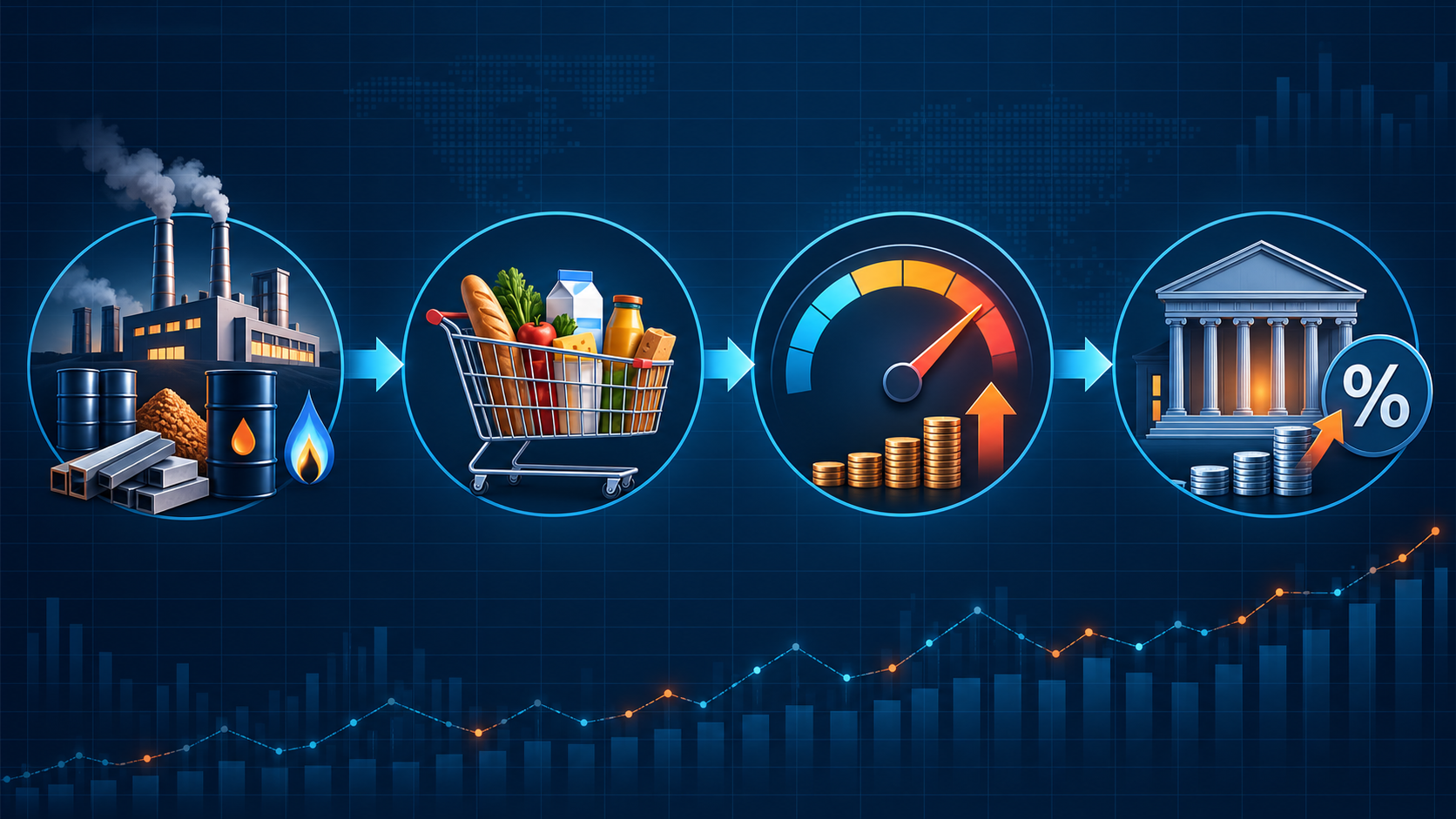
August 2026 producer prices and consumer prices both rose 0.4% from the prior month, but that matching headline does not mean PPI predicts CPI one-for-one. The Producer Price Index measures prices received by domestic producers, while the Consumer Price Index measures prices paid by consumers. They cover different baskets, weights, and stages of the pricing chain.
August inflation scoreboard
| Measure | Monthly | Yearly | Key detail |
|---|---|---|---|
| Final-demand PPI | +0.4% | +5.4% | Goods +1.1%; services +0.1% |
| Headline CPI | +0.4% | +3.4% | Gasoline drove more than one-third of the monthly rise |
| Core CPI | +0.3% | +2.4% | Excludes food and energy |
| PPI excluding food, energy and trade services | +0.3% | — | Underlying producer-price measure |
The data show pressure at both stages, especially in energy-sensitive goods. They also show why investors should inspect components rather than compare only two headline percentages.
The four-stage transmission path
- Producer input: Energy, commodities, freight, labor, and imported components change in price.
- Company margin: A business absorbs the cost, improves efficiency, hedges it, or passes it forward.
- Consumer price: Retail prices change only if competition and demand allow it.
- Policy and markets: Persistent consumer inflation can alter Fed expectations, bond yields, and equity valuations.
Each stage can weaken or delay the link. Long-term contracts may postpone a price increase. Currency movements can offset an imported cost. A retailer may accept lower margins to protect market share. A company with pricing power may pass on costs quickly.
Why the baskets differ
CPI places substantial weight on consumer services and housing-related costs. PPI includes many business transactions that do not enter the consumer basket in the same form. Trade margins, intermediate demand, and producer prices can move differently from rent, medical services, or consumer insurance.
A sharp rise in final-demand goods may signal pressure without determining next month’s CPI. The direction can be informative; the magnitude is not mechanically transferable.
How investors can use both reports
| Question | Best place to start |
|---|---|
| Are business input pressures rising? | PPI goods and intermediate-demand detail |
| What are households paying? | CPI headline and category tables |
| Is underlying consumer inflation persistent? | Core CPI and services detail |
| Which companies face margin pressure? | PPI components plus earnings disclosures |
| Could rates change? | Inflation, labor data and Treasury yields together |
A company-level test
When inflation accelerates, check a company’s earnings materials for price, volume, gross margin, inventories, and hedging. A producer-price shock becomes an investment issue only through a firm’s cost structure and ability to respond.
Bottom line
PPI is an upstream signal and CPI is a household-facing outcome. August’s matching 0.4% increases highlight common energy pressure, not a fixed conversion rule. Trace costs through margins and consumer demand instead of treating PPI as an advance copy of CPI.
Related reading: August PPI breakdown.
Primary sources
This article is for informational purposes only and is not investment advice.