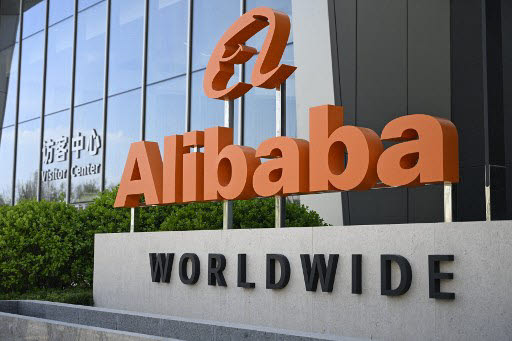
BABA Stock Analysis: Alibaba Surges as AI Cloud Growth, Qwen and China Tech Rally Drive Revaluation
Alibaba Group Holding Ltd. (NYSE: BABA, HK: 9988) jumped sharply as investors rotated back into China technology stocks and reassessed Alibaba’s role in AI, cloud infrastructure, and consumer commerce.
At the time of writing, BABA ADR was trading around $108.56, up roughly 10.6% on the day, with an intraday range of $105.74 to $109.64 and volume above 19 million shares. The move came as Alibaba’s Hong Kong shares recorded one of their strongest daily gains in months, supported by renewed investor interest in less-crowded AI trades outside the U.S. and Korea.
The key question for investors is simple: Is Alibaba being revalued as a China AI cloud leader, or is this mainly a short-term rebound in beaten-down Chinese technology stocks?
Why Is BABA Stock Rising?
BABA stock is rising because several catalysts are happening at the same time.
First, China and Hong Kong technology stocks are rebounding strongly. Alibaba’s Hong Kong shares rose 12.2%, marking their best daily performance in about 10 months, while U.S.-listed ADRs also rallied sharply.
Second, investors appear to be looking for less-crowded AI opportunities. After large gains in U.S., Korean, and Taiwanese AI-related names, some investors are rotating into Hong Kong-listed technology companies that still trade at discounted valuations. Alibaba fits that theme because it has exposure to AI, cloud computing, e-commerce, and China’s digital economy.
Third, Alibaba’s cloud business is showing strong growth. In the March quarter of fiscal 2026, Cloud Intelligence Group revenue increased 38% year over year to RMB 41.6 billion, while external customer revenue grew 40%. Alibaba said the growth was driven by public cloud demand and increased adoption of AI-related products.
Fourth, Alibaba’s Qwen AI ecosystem is becoming a more important part of the company’s investment story. Qwen3 supports both “thinking” and “non-thinking” modes, allowing users to balance reasoning performance, speed, and cost.
In short, BABA is not just moving because of e-commerce optimism. The rally is being driven by a broader revaluation of Alibaba as a China AI, cloud, and digital infrastructure company.
Key Takeaways
| Key Point | Why It Matters |
|---|---|
| BABA ADR rose more than 10% | Strong short-term momentum and renewed investor interest |
| Hong Kong shares rose 12.2% | One of Alibaba’s strongest daily gains in months |
| Cloud revenue grew 38% | Confirms Alibaba’s AI cloud story is becoming more important |
| External cloud revenue grew 40% | Shows stronger demand from customers outside Alibaba’s internal ecosystem |
| Qwen AI remains a key catalyst | Supports Alibaba’s AI model, MaaS, and cloud growth narrative |
| Quick commerce revenue grew 57% | Shows consumer platform expansion, but also raises cost concerns |
| Adjusted EBITA fell sharply | Profitability remains under pressure from investment spending |
| Free cash flow turned negative | AI infrastructure and quick commerce investment are weighing on cash generation |
What Does Alibaba Do?
Alibaba is one of China’s largest technology companies. Its core businesses include China e-commerce, international commerce, cloud computing, artificial intelligence, logistics, local services, and digital media.
For years, investors mainly viewed Alibaba as a China e-commerce platform built around Taobao and Tmall. That view is changing. Alibaba is increasingly being valued through three major lenses:
- China consumer commerce.
- Alibaba Cloud and AI infrastructure.
- Qwen AI and model-as-a-service opportunities.
This shift is important because Alibaba’s traditional e-commerce business is mature, while AI and cloud may offer a higher-growth narrative.
Alibaba Cloud Is the Core of the Revaluation Story
The strongest part of Alibaba’s recent financial report was Cloud Intelligence Group.
For the March quarter of fiscal 2026, Cloud Intelligence Group revenue reached RMB 41.6 billion, up 38% year over year. External customer revenue grew 40%, mainly driven by public cloud growth and adoption of AI-related products. :contentReference
Cloud profitability also improved. Cloud Intelligence Group adjusted EBITA increased 57% year over year to RMB 3.8 billion, helped by revenue growth and better operating efficiency.
This is why BABA is getting renewed attention from AI investors. Alibaba is not only an e-commerce company. It is also one of China’s most important cloud infrastructure providers, and cloud is where AI demand can translate into revenue.
Qwen AI Could Become a Long-Term Growth Driver
Alibaba’s Qwen AI models are another reason investors are paying attention.
Qwen3 is designed with dual thinking modes. “Thinking” mode supports deeper reasoning for complex tasks, while “non-thinking” mode supports faster responses for more general use cases. This allows users to manage the trade-off between performance, speed, and cost.
That matters because AI adoption is not only about having powerful models. Enterprise customers also care about cost efficiency, inference speed, deployment flexibility, and integration with cloud infrastructure.
If Alibaba can connect Qwen AI models with Alibaba Cloud, enterprise tools, e-commerce, and model-as-a-service offerings, Qwen could become an important part of the company’s long-term AI monetization strategy.
China E-Commerce Is Still Important, But Growth Is Slower
Alibaba’s e-commerce business remains the company’s core cash engine, but it is no longer the only part of the story.
In the March quarter of fiscal 2026, Alibaba’s China e-commerce revenue was under pressure, while customer management revenue showed modest improvement. The company also noted that growth would have looked stronger on a like-for-like basis excluding certain contra-revenue impacts from new business development programs.
The challenge is that Alibaba is investing heavily to defend and expand its consumer platform. Quick commerce, user experience improvements, and AI-related product investment are all important strategically, but they also weigh on margins.
For investors, this creates a trade-off: Alibaba’s consumer ecosystem remains valuable, but near-term profit margins may stay under pressure.
Quick Commerce Is a Growth Opportunity and a Margin Risk
Quick commerce is one of Alibaba’s fastest-growing consumer businesses.
In the March quarter of fiscal 2026, Quick Commerce revenue increased 57% year over year, supported by order growth from Taobao Instant Commerce.
That growth is positive because it shows Alibaba is still expanding its consumer ecosystem. However, quick commerce can be expensive. Delivery networks, subsidies, user acquisition, and logistics costs can pressure profitability.
Alibaba’s sales and marketing expenses increased as a percentage of revenue, partly because of quick commerce investment and user acquisition for Qwen-related products.
That is why quick commerce should be viewed as both a catalyst and a risk.
Profitability Is the Biggest Concern
The strongest bearish argument against BABA is not revenue. It is profitability.
Alibaba’s total revenue increased modestly in fiscal 2026, but profitability weakened sharply in the March quarter. Operating results were pressured by investments in technology businesses, quick commerce, user experience, and AI-related initiatives.
This is the main issue investors need to watch. Cloud and AI growth are attractive, but if Alibaba has to spend heavily to defend commerce, acquire Qwen users, and expand cloud infrastructure, near-term earnings may remain volatile.
In other words, Alibaba’s AI story is real, but it is not free.
Free Cash Flow Turned Negative
Alibaba still has a very strong balance sheet, but free cash flow has become a major watch item.
For fiscal 2026, free cash flow turned negative as the company increased investment in quick commerce and cloud infrastructure. Alibaba reported substantial liquidity, but the shift from positive to negative free cash flow shows that the company is currently in an investment-heavy phase.
This matters because investors may tolerate weaker free cash flow if they believe AI and cloud investments will create future growth. But if revenue growth does not accelerate enough, negative free cash flow could become a valuation concern.
Why Investors Are Rotating Back Into Alibaba
The BABA rally is part of a broader market rotation.
Investors have spent much of the AI cycle buying U.S. semiconductor stocks, AI infrastructure leaders, and Korean or Taiwanese hardware names. But after those trades became crowded, some investors began looking for cheaper AI exposure in China and Hong Kong technology stocks.
Alibaba benefits from that rotation because it offers several themes in one stock:
| Theme | Alibaba Exposure |
|---|---|
| China AI | Qwen models and AI products |
| Cloud infrastructure | Alibaba Cloud and public cloud growth |
| E-commerce | Taobao, Tmall, and customer management revenue |
| Quick commerce | Taobao Instant Commerce and local delivery |
| China tech rebound | Hong Kong and ADR revaluation |
| Strong liquidity | Large cash and liquid investment base |
This combination makes BABA attractive to investors looking for a China technology recovery trade with AI exposure.
Geopolitical Risk Still Matters
Alibaba’s AI story also comes with geopolitical risk.
Reuters reported that Beijing has been considering restrictions on overseas access to China’s top AI models, with discussions involving major Chinese technology companies including Alibaba, ByteDance, and Zhipu AI.
This could be interpreted in two ways.
On one hand, restrictions may protect China’s most advanced AI models and support domestic AI sovereignty. On the other hand, they could limit overseas adoption of Chinese AI models and reduce Alibaba’s ability to scale AI products internationally.
For BABA investors, this is an important risk because Alibaba’s AI valuation depends partly on whether Qwen and Alibaba Cloud can grow beyond China.
Bull Case for BABA Stock
The bullish case for BABA is based on five factors.
First, Alibaba Cloud is growing rapidly. Cloud Intelligence Group revenue rose 38% year over year, while external customer revenue grew 40%.
Second, Qwen AI gives Alibaba a credible AI model platform that can be integrated with cloud, enterprise services, and consumer applications.
Third, Alibaba may benefit from investor rotation into less-crowded AI trades, especially after U.S. and Asian semiconductor names became more crowded.
Fourth, quick commerce is growing quickly, with revenue up 57% year over year in the March quarter.
Fifth, Alibaba has a large liquidity base, giving it the flexibility to keep investing in AI, cloud infrastructure, consumer platforms, dividends, and shareholder returns.
If cloud growth remains strong and profitability stabilizes, BABA could continue to be revalued as a China AI cloud leader.
Bear Case for BABA Stock
The bearish case is also clear.
First, Alibaba’s overall revenue growth remains modest compared with the growth rates in cloud and quick commerce. That means the faster-growing businesses are not yet enough to transform consolidated growth.
Second, profitability is under pressure. Investments in quick commerce, user experience, AI, and cloud infrastructure have reduced margins.
Third, free cash flow turned negative in fiscal 2026, showing that Alibaba’s growth strategy is currently capital intensive.
Fourth, China consumer demand remains uncertain. Alibaba’s core commerce business is still exposed to domestic spending trends.
Fifth, geopolitical risk could affect Alibaba’s AI ambitions, especially if China restricts overseas access to advanced AI models.
The key risk is that investors may reward Alibaba for AI potential in the short term, then punish the stock if earnings and free cash flow do not recover.
BABA Investment Framework
| Question | Why It Matters | What Investors Should Watch |
|---|---|---|
| Can cloud revenue keep growing above 30%? | Cloud is the core AI revaluation driver. | Cloud Intelligence Group revenue and external customer growth |
| Can Qwen become a real business driver? | AI model adoption needs to translate into revenue. | Qwen usage, MaaS adoption, enterprise AI demand |
| Will quick commerce losses narrow? | Growth is strong, but margins matter. | Delivery costs, subsidies, marketing expenses |
| Can free cash flow recover? | Negative FCF limits valuation upside. | Cloud capex, operating cash flow, investment intensity |
| Can BABA break above $110? | $110 is a near-term technical and psychological level. | Volume-backed breakout and follow-through |
BABA Momentum Score
| Category | Score | Explanation |
|---|---|---|
| Catalyst clarity | 13 / 15 | China tech rally, AI cloud growth, Qwen, and quick commerce expectations are clear catalysts. |
| News credibility | 8 / 10 | Stock move and official financial data are strong, but some quick-commerce margin expectations still need confirmation. |
| Price momentum | 14 / 15 | BABA rose more than 10% with heavy volume. |
| Sector alignment | 14 / 15 | Strong connection to China AI, cloud infrastructure, Qwen, e-commerce, and Hong Kong tech rotation. |
| Fundamental improvement | 8 / 15 | Cloud is strong, but consolidated revenue growth remains modest. |
| Profitability risk | 5 / 10 | Adjusted profitability was pressured by investment spending. |
| Free cash flow risk | 4 / 10 | FY2026 free cash flow turned negative. |
| Balance sheet strength | 8 / 10 | Alibaba still has substantial liquidity and financial flexibility. |
Overall score: 74 / 100
Rating: Strong China AI cloud revaluation candidate, but profitability and free cash flow must improve.
What Investors Should Watch Next
The first key level is $110. BABA traded as high as $109.64, so a clean move above $110 with strong volume would suggest that the China tech revaluation trade is continuing.
The second checkpoint is cloud growth. Investors should watch whether Alibaba Cloud can maintain strong external customer revenue growth, especially as AI-related product demand continues.
The third checkpoint is Qwen monetization. User growth alone is not enough. Alibaba needs Qwen to support cloud usage, enterprise AI revenue, model-as-a-service demand, or consumer product monetization.
The fourth checkpoint is quick commerce profitability. Quick commerce revenue is growing fast, but investors need evidence that losses are narrowing and marketing spending is becoming more efficient.
The fifth checkpoint is free cash flow. If Alibaba can return to positive free cash flow while sustaining AI and cloud investment, the stock’s revaluation case becomes stronger.
Bottom Line
Alibaba’s rally is not just a simple rebound in a beaten-down Chinese e-commerce stock. The market is starting to reprice BABA as a China AI cloud leader, supported by Alibaba Cloud growth, Qwen AI, quick commerce expansion, and renewed investor interest in less-crowded AI trades.
The strongest part of the story is cloud. Cloud Intelligence Group revenue grew 38% year over year, and external cloud customer revenue grew 40%, showing that AI and public cloud demand are becoming more important to Alibaba’s future.
However, investors should not ignore the risks. Profitability is under pressure, quick commerce and Qwen user acquisition are expensive, and fiscal 2026 free cash flow turned negative. Alibaba has a powerful AI and cloud story, but the company still needs to prove that growth can translate into sustainable earnings and cash flow.
The best way to think about BABA is this:
Alibaba has become one of the most important China AI cloud revaluation trades, but the next phase depends on cloud growth, Qwen monetization, quick commerce losses, and free cash flow recovery.
This article is for informational purposes only and is not financial advice. Investors should conduct their own research before making any investment decision.
FAQ
Why is BABA stock rising?
BABA stock is rising because investors are rotating back into China technology stocks, Alibaba Cloud is showing strong AI-related growth, and the market is reassessing Alibaba’s Qwen AI and cloud infrastructure opportunity. :contentReference[oaicite:25]{index=25}
Is Alibaba an AI stock?
Alibaba is not a pure AI stock, but it has major AI exposure through Alibaba Cloud, Qwen models, AI-related cloud products, and model-as-a-service offerings.
How fast is Alibaba Cloud growing?
Alibaba Cloud Intelligence Group revenue grew 38% year over year in the March quarter of fiscal 2026, while external customer revenue grew 40%. :contentReference[oaicite:26]{index=26}
What is Qwen AI?
Qwen is Alibaba’s large language model family. Qwen3 supports both thinking and non-thinking modes, allowing users to balance reasoning performance, response speed, and cost.
Why does quick commerce matter for Alibaba?
Quick commerce matters because it can increase user engagement and order frequency, but it can also pressure margins through delivery costs, subsidies, and marketing expenses.
What is the biggest risk for BABA stock?
The biggest risk is that AI and quick commerce growth may not translate into sustainable profits and free cash flow. Alibaba’s fiscal 2026 free cash flow turned negative as investment spending increased.
What price level matters for BABA?
The key short-term level is $110. BABA traded as high as $109.64, so a breakout above $110 with strong volume would be an important momentum signal.