
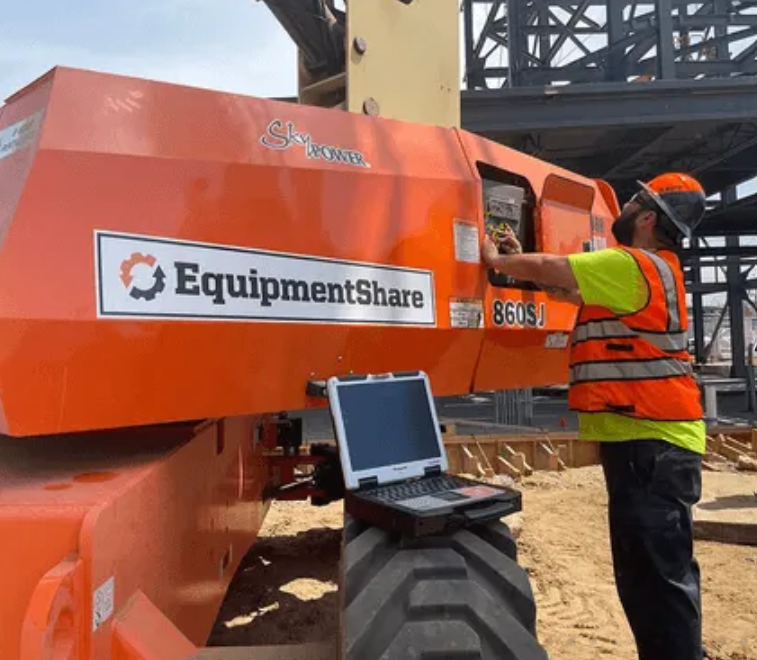
EQPT Stock: Is EquipmentShare’s $500M Buyback Enough to Offset Its Debt Risk?
EquipmentShare.com Inc. (NASDAQ: EQPT) surged after raising its 2026 financial outlook and announcing a new $500 million share repurchase program. The announcement gave investors a clear reason to revisit the stock after a difficult post-IPO trading period.
But the real question is not simply why EQPT stock went up.
The more important question is this:
Is EquipmentShare becoming a technology-enabled equipment rental platform with a long growth runway, or is it still a highly leveraged construction rental company facing heavy capital requirements?
That distinction matters because the market may value EquipmentShare very differently depending on which story proves correct.
Why Is EQPT Stock Rising?
EQPT stock is rising because EquipmentShare raised its 2026 guidance and announced a large buyback authorization.
The company pointed to stronger-than-expected customer demand, better first-half performance, sustained fleet utilization and disciplined execution. Management also authorized up to $500 million of Class A common stock repurchases through the end of 2028.
For a stock that priced its IPO at $24.50 but later traded well below that level, the buyback announcement is important. It suggests management may believe the market is undervaluing the company.
However, investors should separate two things:
A buyback authorization is a positive signal.
Actual buyback execution is what matters.
The company is not required to repurchase the full $500 million. The pace and size of repurchases will depend on market conditions, cash flow, debt levels and capital needs.
That is why the buyback is a catalyst, but not a complete investment thesis by itself.
Key Takeaways
| Key Point | Why It Matters |
|---|---|
| EquipmentShare raised 2026 guidance | Management sees stronger demand than previously expected |
| $500M buyback was authorized | Signals confidence after weak post-IPO performance |
| Rental revenue is growing quickly | Core business remains the main growth driver |
| T3 platform differentiates the company | Gives EQPT a construction technology angle |
| Data center and infrastructure demand are tailwinds | Large projects support rental equipment demand |
| Debt and interest expense remain major risks | Growth is capital-intensive |
| Q1 still showed a GAAP net loss | Growth has not fully translated into clean profitability |
| $20 is a key near-term level | A breakout could confirm renewed momentum |
What Does EquipmentShare Do?
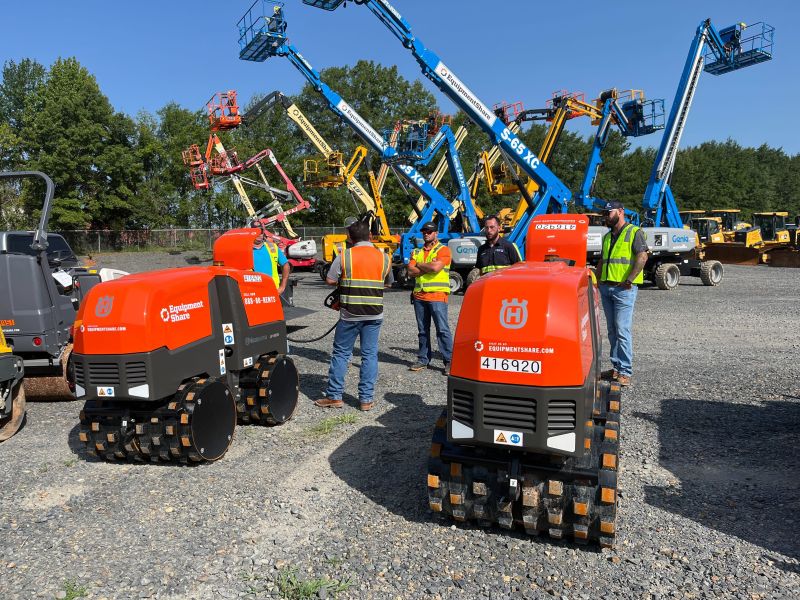
EquipmentShare is a construction equipment rental company with a technology layer.
The company rents and sells equipment such as excavators, lifts, forklifts, earthmoving equipment and industrial tools. That part of the business looks similar to traditional equipment rental companies.
But EquipmentShare’s main differentiator is its T3 platform.
T3 is designed to help customers manage equipment location, utilization, maintenance, access, safety and jobsite activity. In simple terms, EquipmentShare is trying to combine physical rental equipment with software, telematics and operational data.
This is the core of the EQPT story.
If the market sees EquipmentShare as just another equipment rental company, it may compare the stock mainly with traditional rental peers.
If the market sees EquipmentShare as a construction technology platform, the stock may receive a higher growth multiple.
That is why T3 matters so much.
EquipmentShare vs. United Rentals: What Makes EQPT Different?
The most important comparison for EquipmentShare is United Rentals.
United Rentals is the dominant equipment rental company in North America. It has massive scale, strong profitability, a large branch network and deep customer relationships.
EquipmentShare is smaller, newer and growing faster.
The key difference is that EquipmentShare is trying to build a more technology-integrated rental model from the beginning. Its T3 platform is not just an optional add-on. It is part of the company’s operating model.
This creates a clear bull case:
If T3 improves utilization, customer retention, fleet visibility and jobsite efficiency, EquipmentShare could grow faster than legacy rental peers.
But it also creates a clear risk:
If customers view T3 as useful but not truly differentiated, EquipmentShare may still be valued like a traditional rental company with higher debt and heavier expansion costs.
That is the central debate around EQPT stock.
Why the T3 Platform Matters for Google and Investors
T3 is not just a company feature. It is the keyword that helps separate EquipmentShare from ordinary equipment rental stocks.
Traditional rental companies compete on equipment availability, branch density, pricing and service.
EquipmentShare wants to compete on those factors plus software.
The company’s pitch is that customers can use T3 to better understand:
| T3 Function | Why Customers Care |
|---|---|
| Equipment location | Reduces wasted time finding assets |
| Utilization data | Helps avoid over-renting or underusing equipment |
| Maintenance tracking | Reduces downtime |
| Worker access control | Improves jobsite safety and accountability |
| Fleet management | Gives contractors better visibility across projects |
| Jobsite data | Supports better decision-making |
This is why EQPT can be framed as a construction technology stock, not only an equipment rental stock.
That positioning gives the article more search potential because it can target multiple keyword groups:
EquipmentShare T3 platformconstruction technology stockequipment rental softwarefleet management constructionUnited Rentals competitor
Why Data Center and Infrastructure Demand Matter
EquipmentShare benefits from construction activity, but not all construction demand is equal.
The most important demand drivers are large, equipment-heavy projects such as:
| Demand Driver | Why It Helps EquipmentShare |
|---|---|
| Data center construction | Requires lifts, earthmoving equipment, power equipment and jobsite coordination |
| Infrastructure projects | Roads, bridges, utilities and public works require heavy equipment |
| Advanced manufacturing | Semiconductor, battery and industrial projects need large rental fleets |
| Energy infrastructure | Grid, pipeline and power projects support equipment demand |
| Commercial construction | Supports broader rental utilization |
This matters because EquipmentShare is not only exposed to housing or small contractors. Large industrial, infrastructure and data center projects can create longer-duration rental demand.
That is one reason the market reacted positively to the guidance raise.
If demand from data centers, infrastructure and advanced manufacturing remains strong, EquipmentShare may continue to grow even if some parts of construction slow.
The $500M Buyback: Smart Capital Allocation or Risky Timing?
The $500 million buyback is a major part of the story.
On the positive side, a buyback can signal that management believes the stock is undervalued. It can also reduce share count and support EPS over time.
That is especially important because EQPT has traded below its IPO price. A buyback can help restore confidence after a weak debut as a public company.
But there is another side.
EquipmentShare is still a capital-intensive business. It needs money for equipment, branches, technology, employees, maintenance, logistics and fleet expansion. The company also carries meaningful debt.
That creates a strategic question:
Should EquipmentShare use capital to repurchase stock, or should it prioritize debt reduction and business expansion?
The answer depends on execution.
If the company generates strong cash flow and repurchases stock at attractive prices, the buyback could be shareholder-friendly.
If leverage stays high and cash flow disappoints, the buyback could be criticized as aggressive.
That is why investors should not only celebrate the authorization. They should monitor actual repurchases, free cash flow and leverage.
Guidance Raise: What Changed?
EquipmentShare raised its 2026 outlook across several key metrics.
| Metric | Prior 2026 Guidance | Updated 2026 Guidance |
|---|---|---|
| Total revenue | $5.147B–$5.575B | $5.254B–$5.682B |
| Rental segment revenue | $3.366B–$3.642B | $3.472B–$3.748B |
| Adjusted Core EBITDA | $1.883B–$1.995B | $1.946B–$2.058B |
| OEC under management | $10.150B–$11.200B | $10.577B–$11.627B |
| Full-service rental locations | 427–435 | 427–435 |
The guidance raise matters because it suggests the company is seeing stronger demand without needing to increase its expected location count.
That is important.
If revenue and EBITDA guidance rise while the location target stays the same, it may imply stronger productivity, better utilization, better pricing or stronger demand per branch.
For investors, that is more encouraging than growth that depends only on opening more locations.
Q1 Results: Growth Is Strong, But Profitability Is Not Fully Clean Yet
EquipmentShare’s Q1 2026 results showed strong growth, but also highlighted the main risk.
Total revenue increased strongly, rental revenue grew rapidly, and Adjusted Core EBITDA improved. The company benefited from demand across industrial, infrastructure, data center and advanced manufacturing projects.
However, the company still reported a GAAP net loss for the quarter.
That means EQPT is not yet a simple profitability story.
The business is scaling, but expansion costs, depreciation, interest expense and new branch investment still weigh on net income.
This is why investors should focus on the quality of growth.
The key question is not only whether EquipmentShare can grow revenue.
The key question is whether that growth can turn into durable earnings and free cash flow.
Mature Locations Are the Margin Story
One of the most important details in the EquipmentShare thesis is the difference between mature and newer locations.
New locations require upfront investment. They need equipment, employees, systems, customer relationships and local operating scale.
Mature locations are different. Once a location has enough demand, fleet density and local customer relationships, margins can improve meaningfully.
That is why the maturity curve matters.
If EquipmentShare’s newer locations mature as expected, the company’s overall margin profile could improve over time.
But if new locations take longer to mature, or if demand weakens before they reach scale, profitability could disappoint.
Investors should watch:
| Metric | Why It Matters |
|---|---|
| Mature location EBITDA margin | Shows long-term earnings potential |
| New location openings | Shows growth pace |
| Rental utilization | Measures fleet productivity |
| Revenue per location | Shows branch-level productivity |
| EBITDA margin trend | Shows whether scale is working |
| Free cash flow | Confirms whether growth is financially sustainable |
The OWN Program: Capital-Light Advantage or Hidden Complexity?
EquipmentShare’s OWN Program is another important part of the business model.
Under the OWN Program, third-party participants own equipment that EquipmentShare manages and rents through its platform. This helps the company expand fleet capacity without owning every piece of equipment directly.
The advantage is clear.
EquipmentShare can grow faster while reducing some balance sheet pressure.
But the model also adds complexity.
The company must manage payouts to equipment owners, utilization levels, maintenance, customer demand and fleet economics. If utilization is strong, the model can work well. If utilization weakens, the economics may become less attractive.
This is why investors should watch OEC under management and the percentage tied to the OWN Program.
The OWN Program can support growth, but it does not eliminate execution risk.
Debt Is the Biggest Bear Case
The biggest risk for EQPT is not demand.
The biggest risk is leverage.
Equipment rental is an asset-heavy business. Even with software and the OWN Program, EquipmentShare still needs significant capital to grow.
The company has issued large amounts of debt, including senior secured notes with a high coupon. That creates a meaningful interest burden.
This matters because high interest expense can limit the benefit of revenue growth.
A company can grow quickly and still struggle to generate strong net income if debt costs are too high.
That is why the debt question is central to the EQPT thesis.
The buyback may excite investors, but the balance sheet still matters.
Bull Case for EQPT Stock
The bull case for EQPT is that EquipmentShare is becoming a faster-growing, technology-enabled version of the traditional equipment rental model.
The strongest bullish points are:
| Bull Case Factor | Why It Matters |
|---|---|
| Raised 2026 guidance | Confirms stronger demand |
| $500M buyback | Signals management confidence |
| Strong rental revenue growth | Core business is expanding |
| T3 platform | Differentiates EQPT from traditional rental peers |
| Data center and infrastructure demand | Supports long-duration rental activity |
| Mature location margins | Suggests long-term profitability potential |
| OWN Program | Helps scale fleet capacity |
| IPO price gap | Stock may still have recovery potential if execution improves |
If EquipmentShare delivers on guidance, improves margins and manages leverage, the stock could continue to be revalued.
Bear Case for EQPT Stock
The bear case is that EquipmentShare remains a highly leveraged rental company in a cyclical industry.
The biggest risks are:
| Bear Case Factor | Why It Matters |
|---|---|
| High debt | Interest expense can pressure earnings |
| Capital intensity | Growth requires equipment and branch investment |
| GAAP net loss | Profitability is not fully proven |
| Construction cyclicality | Demand can weaken if projects slow |
| Buyback uncertainty | Authorization does not guarantee execution |
| T3 execution risk | Technology may not justify a major premium |
| IPO overhang | Investors who bought higher may sell into rallies |
| Rapid expansion | New locations may take time to mature |
This is why chasing EQPT after a sharp rally can be risky.
The company has a strong story, but it still needs to prove that growth can convert into consistent profitability.
EQPT Stock: Key Price Levels to Watch
EQPT’s price action matters because the stock is still trying to rebuild confidence after a weak post-IPO period.
The important levels are:
| Price Level | Why It Matters |
|---|---|
| $18 | Short-term support after the rally |
| $20 | Psychological resistance and near-term breakout level |
| $24.50 | IPO price and major sentiment level |
| Below $16 | Would suggest the rally is fading |
| Above $20 with volume | Would suggest renewed institutional interest |
The $20 level is especially important.
If EQPT breaks above $20 with strong volume, the market may be treating the guidance raise and buyback as a real revaluation event.
If the stock fails near $20 and falls back toward $16, the move may be viewed as a temporary post-announcement bounce.
EQPT Investment Framework
| Question | Why It Matters | What Investors Should Watch |
|---|---|---|
| Can EquipmentShare meet raised guidance? | The rally depends on execution. | 2026 revenue and Adjusted Core EBITDA |
| Will the buyback actually reduce share count? | Authorization alone is not enough. | Quarterly repurchase activity |
| Can T3 improve customer economics? | This is the technology premium argument. | Utilization, retention, customer growth |
| Are new locations maturing profitably? | Drives long-term margin improvement. | Mature location margin and branch productivity |
| Can debt remain manageable? | Interest costs are a key risk. | Interest expense, leverage and liquidity |
| Can EQPT break above $20? | Confirms technical momentum. | Volume and follow-through |
EQPT Momentum Score
| Category | Score | Explanation |
|---|---|---|
| Catalyst clarity | 14 / 15 | Guidance raise and $500M buyback are clear official catalysts. |
| News credibility | 9 / 10 | The move is based on company announcements, not rumors. |
| Price momentum | 13 / 15 | EQPT rallied strongly with higher volume. |
| Sector alignment | 11 / 15 | Infrastructure, data center and advanced manufacturing demand support the story. |
| Fundamental improvement | 12 / 15 | Revenue and EBITDA outlook improved, but GAAP profitability remains uneven. |
| Technology differentiation | 8 / 10 | T3 gives EQPT a stronger story than traditional rental peers. |
| Debt risk | 5 / 10 | High debt and interest expense remain major concerns. |
| Buyback quality | 7 / 10 | Large authorization, but actual execution must be verified. |
Overall score: 79 / 100
Rating: Strong growth and buyback-driven revaluation candidate, but debt and execution risk remain key.
What Investors Should Watch Next
The first checkpoint is whether EQPT can hold the $18 area after the rally. A stable base above $18 would suggest investors are not immediately selling the guidance and buyback news.
The second checkpoint is the $20 level. A clean break above $20 with strong volume would be an important technical confirmation.
The third checkpoint is actual buyback execution. Investors should check whether the $500 million authorization turns into real repurchases and whether diluted share count declines.
The fourth checkpoint is debt management. EquipmentShare must show that interest expense and leverage will not overwhelm operating growth.
The fifth checkpoint is location maturity. The company needs new branches to mature into high-margin locations over time.
The sixth checkpoint is T3 proof. Investors should look for evidence that the T3 platform improves customer retention, utilization, pricing power or operating efficiency.
Bottom Line
EquipmentShare’s rally is supported by real catalysts: higher 2026 guidance and a $500 million buyback authorization.
But the stock should not be analyzed only as a simple post-earnings momentum trade.
The bigger question is whether EquipmentShare can become a technology-enabled construction rental platform that deserves a premium valuation, or whether it remains a highly leveraged equipment rental company with cyclical exposure.
The bull case is clear. Rental demand is strong, data center and infrastructure projects support growth, the T3 platform gives EquipmentShare a differentiated story, and the buyback signals management confidence.
The bear case is also clear. The company is capital-intensive, debt costs are high, quarterly GAAP profitability remains uneven, and the buyback must be balanced against leverage and growth investment.
The best way to think about EQPT is this:
EquipmentShare has a credible revaluation story, but the next phase depends on guidance execution, real buyback activity, margin improvement, T3 differentiation and disciplined debt management.
This article is for informational purposes only and is not financial advice. Investors should conduct their own research before making any investment decision.
FAQ
Why is EQPT stock rising?
EQPT stock is rising because EquipmentShare raised its 2026 financial outlook and authorized a $500 million share repurchase program. Investors viewed the announcement as a sign of stronger demand and management confidence.
What does EquipmentShare do?
EquipmentShare rents and sells construction equipment and uses its T3 platform to help customers manage equipment, utilization, maintenance, access and jobsite operations.
What is EquipmentShare’s T3 platform?
T3 is EquipmentShare’s technology platform for construction equipment and jobsite management. It connects equipment data, worker access, service activity, utilization and operational visibility.
Is EquipmentShare a technology company or an equipment rental company?
EquipmentShare is both. The core business is equipment rental, but the company uses T3 software and telematics to differentiate itself from traditional rental competitors.
Why does the $500 million buyback matter?
The buyback matters because it may signal that management believes the stock is undervalued. However, investors should watch actual repurchase activity because authorization does not guarantee full execution.
What are the biggest risks for EQPT stock?
The biggest risks are high debt, interest expense, capital-intensive growth, construction-cycle exposure, uneven GAAP profitability and uncertainty around actual buyback execution.
What price levels matter for EQPT?
The key levels are $18 as short-term support, $20 as near-term resistance and $24.50 as the IPO price. A move above $20 with strong volume would be a positive momentum signal.
Is EQPT stock still below its IPO price?
Yes. EquipmentShare priced its IPO at $24.50. Even after the recent rally, the stock remains below that level, which makes the IPO price an important sentiment level.
What should investors watch next?
Investors should watch whether EquipmentShare meets its raised guidance, executes the buyback, improves margins as locations mature, manages debt costs and proves that T3 creates a real competitive advantage.
Related Reading
- https://www.equipmentshare.com/
- https://www.internationalrentalnews.com/news/equipmentshare-ups-full-year-guidance/8126528.article?zephr_sso_ott=32tC5N
- https://mgiedit.org/lasr-stock-analysis-nlight-hades-directed-energy-laser-weapons/
- https://mgiedit.org/wdfc-stock-analysis-wd40-earnings-guidance-buyback/